
Crisis decisions happen in seconds. Simulations rehearse those seconds first.
Immersive work-based scenarios designed, populated and debriefed by The Experience Lab. From a two-hour tabletop to a whole-day immersion - your team rehearses the moment before it arrives.
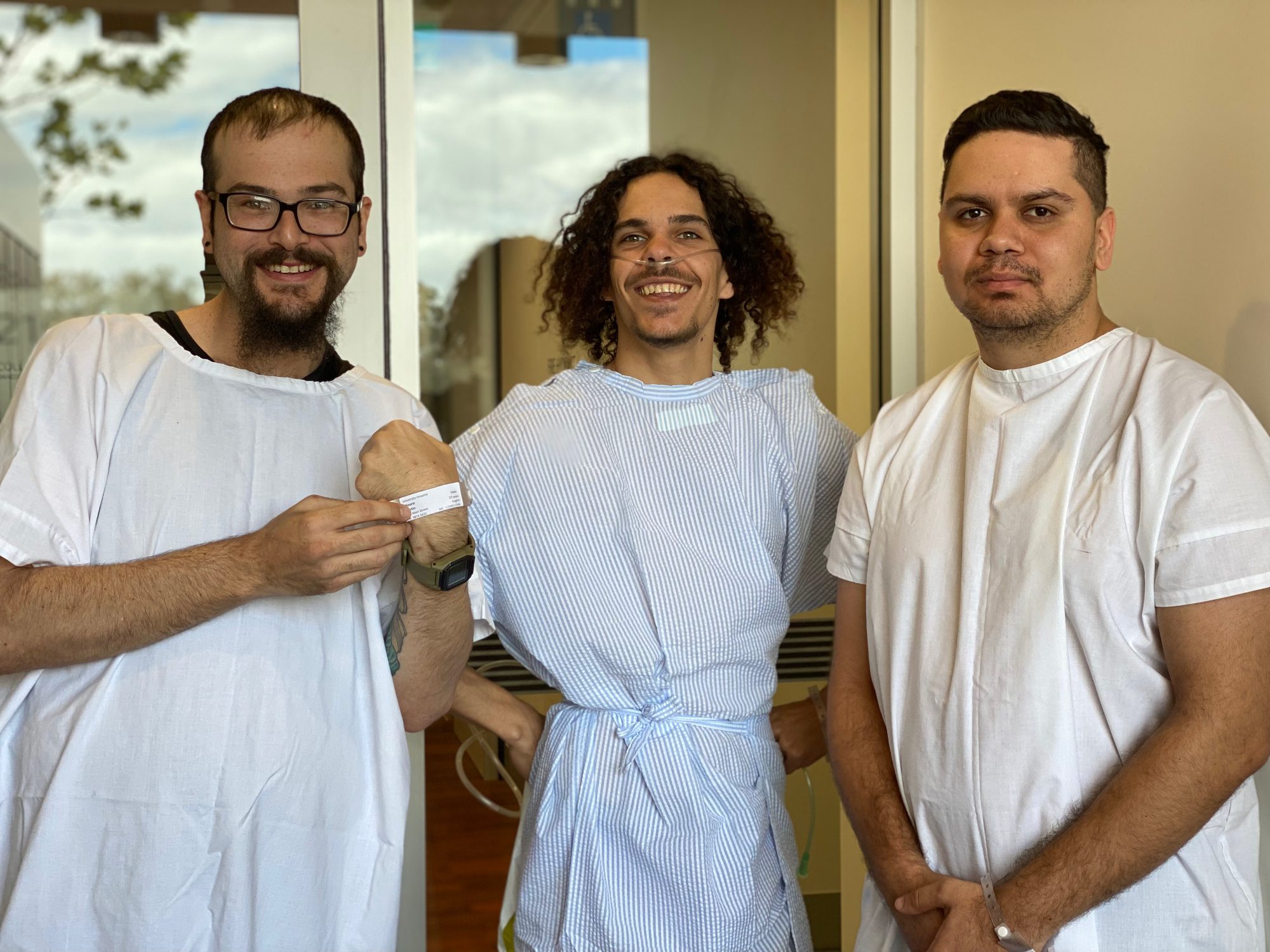
Scenario. Experience. Debrief.
Every simulation we build runs through the same three stages. The shape stays constant; the content shifts to your sector, your roles, your moment. The capability your team builds inside the simulation is the capability they bring to the real event.
Scenarios range from two hours to a full day. Group size is calibrated to learning outcome - smaller for high-pressure single-stakeholder simulations; larger for whole-system scenarios that test coordination across teams. We work in partnership with your faculty, your training team or your operations leads so the simulation reflects the actual conditions your people will face.
The debrief is where the learning lands. Participants reflect on their own performance, get immediate feedback from peers, facilitators and the actors who played the roles, and commit to specific shifts they will take back to the workplace.
Scenario
Designed in partnership with your team. Brief, roles, objectives, constraints, success measures - calibrated to the capability the simulation is trying to build.
Experience
Participants are immersed in a true-to-life scenario and respond in the moment. Our trained actors play customers, clients, journalists, community members, families - every non-workplace role the simulation needs.
Debrief
Structured debrief turns the experience into capability. Reflection, peer and facilitator feedback, and committed shifts back to the workplace.
Pair with RolePlay
Often paired with Developing Through RolePlay when individual practice is the goal alongside the system-level simulation.
Formats we are most often booked for
Every simulation is built around the moment your team needs to be ready for. The most common briefs sit inside one of these six contexts - each scaled and tailored to your sector and your scenario.
- Critical incident response - emergency teams rehearsing the high-stakes moments
- Media training - executives and spokespeople with actors playing reporters and producers
- Leadership simulations - senior cohorts under realistic pressure in unfamiliar contexts
- Customer service support - frontline teams rehearsing escalation and recovery
- OSCE and clinical simulation - trained simulated patients for formative and summative work
- Innovation and design-thinking scenarios under real-world constraint
“The simulation felt close enough to a real incident that our team kept catching themselves slipping into autopilot. That is exactly the muscle we needed to build.”
— Operations Manager, ASX 200 resources company
Frequently asked questions
Typical lead time from scoping call to delivery is four to eight weeks for a custom scenario. Shorter for adaptations of work we have done before in similar sectors. The bulk of the lead time is scenario design and actor briefing, not the day of delivery itself.
You see the scenario brief, the role briefs, the success measures and the debrief framework before delivery. The exact in-scene dialogue is improvised within those boundaries so the simulation responds to what your team does in the moment. That is what makes it feel real.
Yes. We deliver in person at your site, at our Perth studio, at FIFO and remote locations, and virtually for distributed teams. The format shifts to suit - virtual works best for smaller groups with single-stakeholder scenarios.
RolePlay is individual practice on a specific conversation skill. Simulation is system-level - multiple stakeholders, longer timeline, coordination across roles. Many engagements use both: simulation for the whole-team rehearsal, RolePlay for the individual conversations the simulation surfaces.
Every simulation closes with a structured debrief. For larger engagements we provide written observation notes, individual feedback summaries and a recommended follow-up sequence. Six to twelve month refresh patterns work well for high-stakes scenarios where capability needs to stay current.
Training Delivered Differently
What is the moment your team needs to be ready for?
Tell Jacob about the scenario. Twenty minutes to scope the simulation that builds the capability.