
Theory tells you what to do. RolePlay teaches you how to do it.
Reading about a difficult conversation doesn't prepare you to have one. Learning a skill, in the real sense of the word, requires practice with something that responds. Our professionally trained RolePlay and RealPlay actors are the something that responds - for medical education providers and corporate L&D teams alike. Two of The Experience Lab's three founders are Occupational Therapists by training, which is why our actor methodology, briefing protocols and assessment-calibration practice translate so cleanly into medical school, allied-health and clinical simulation environments - the clinical model is part of how we built the company.
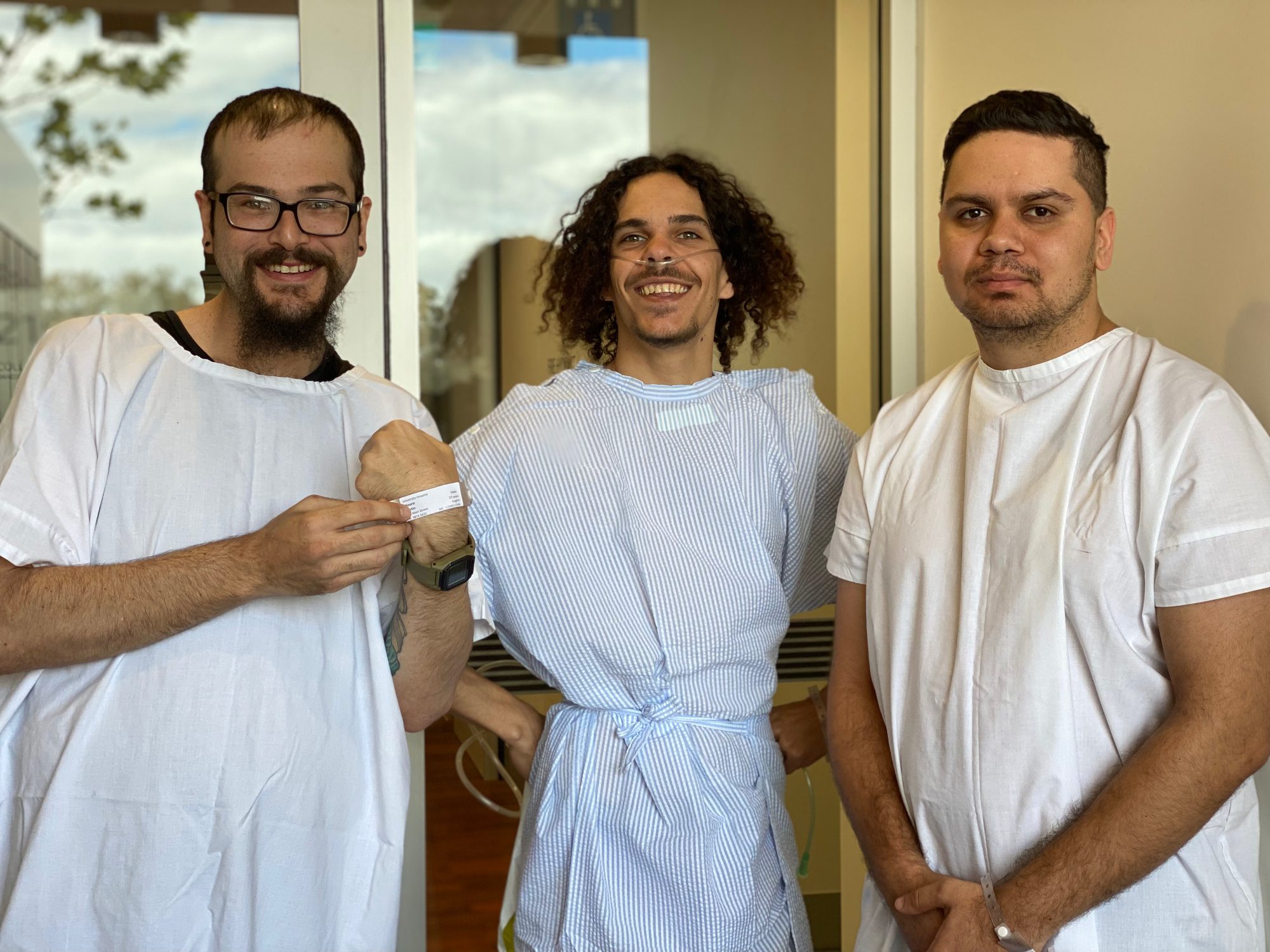
Practice with a partner that responds
Our actors aren't reading a script - they're holding a role with you. A frustrated patient, a defensive direct report, a stakeholder who's lost patience. They respond in character to whatever the participant brings into the room, then step out and give specific, informed feedback on what landed and what didn't.
Medical and tertiary education providers use our roster for OSCE circuits, simulated patient assessments and clinical communication practice. Corporate L&D teams use the same actors for performance conversations, courageous conversations practice, complaint handling and leadership simulation. Same craft, different briefs.
The signature format is RealPlay - the actor takes on a participant's real situation with a named person in their actual workplace, engages live, and provides structured feedback afterwards. The difference compared to generic RolePlay is the specificity and the realism.
Briefed by your clinical faculty or L&D team
Actors arrive prepared. Marking rubrics, learning objectives, terminology and the specific scenarios you're testing for.
RealPlay or RolePlay format
Generic scenarios for foundational skill-building; RealPlay for senior practitioners who need to rehearse their own specific conversations.
Structured feedback in role and out
Actors give real-time in-character signals, then step out and provide informed feedback that respects the participant's level.
Scale on demand
Single-station bookings through to full-day OSCE circuits with multiple simultaneous stations.
Where are you bringing our actors in?
If you're from a medical school, university or tertiary education provider
Medical and tertiary education is the majority of our RolePlay work. You probably already know the problem with internal volunteers and untrained simulated patients. The inconsistency creates assessment bias. The enthusiasm drops off by mid-afternoon. Students who go through one station get a meaningfully different experience to students who go through the next, which erodes assessment validity and, worse, student trust in the process.
Our actors are the fix for that. We provide reliable, calibrated, repeatable characters across OSCE circuits, clinical communication assessment, standardised-patient work, therapeutic interview training and clinical handover practice. Scenarios are briefed in partnership with your clinical faculty so the acting doesn't drift from your assessment criteria.
What we can support:
- OSCE-style practice examinations and summative assessment circuits
- Simulated patient clinics and clinical communication skills units
- Nursing, medical, psychology, social work and counselling education
- Standardised patient roles for formative and summative teaching
- Emergency services and first-responder training simulations
- Correctional services communication and de-escalation practice
Our roster spans ages 18 to 75 and is diverse across cultural background and lived experience. That matters when you're preparing learners for the populations they'll work with.
Craft, not charisma
Great RolePlayers aren't just actors reading a character brief - they're highly trained collaborators in learning. It's not just RolePlay. It's a masterclass in human connection.
Our diverse team - spanning ages, genders, cultural backgrounds and experiences - don't just play the part; they live it. Trained to dive deep into the emotional experience, we help learners grow through real, meaningful insights.
Our actors are selected for craft, coached continuously in our specific techniques, and briefed in depth before every engagement. They don't improvise wildly. They deliver the scenario you need, within the parameters you set, with the calibrated realism that makes the learning stick. That's the difference between an actor who's doing RolePlay and a professional RolePlayer.
How we typically work
Standalone actor bookings are common - you run the curriculum, we supply the practice partner it needs. We also embed actors into our wider training programs where the RolePlay component is one element among many.
- Standalone actor bookings for OSCE circuits and assessment events
- Simulated patient programs aligned to your clinical assessment criteria
- Corporate RolePlay for performance, courageous conversations and complaint handling
- RealPlay format for senior cohorts rehearsing specific real situations
- Multi-station, multi-actor capability for large assessment events
“On Day 1, one of the students said to me - 'he's not an actor is he? He obviously has a real injury!' Nate was sooo good at his role and he nailed the brief perfectly.”
— Asst. Director Learning & Teaching, Curtin University
Frequently asked questions
Yes. Our roster includes experienced simulated patients trained in a range of clinical presentations. We brief the actors in partnership with your clinical faculty to match your assessment criteria precisely - the acting doesn't drift from your marking rubric.
Yes. Standalone actor bookings are common for medical, tertiary, correctional and emergency services clients. We also supply actors to complement your in-house facilitators. You run the curriculum - we supply the practice partner it needs.
RolePlay is scenario-based practice with an actor where the situation is pre-defined - supplied by your team, drawn from a marking rubric or built out with us in advance. The actor arrives knowing exactly who they're playing and what's going to happen. RealPlay is our signature format where the actor builds the character live, in the moment, from what a participant brings into the room - their real direct report, their real conflict, their real conversation. Same trained craft, different starting point: RolePlay rehearses a known scenario, RealPlay rehearses the one you're walking into.
Our roster supports large-scale OSCE circuits and multi-station simulation events. Talk to us about scale and we'll scope it - we've staffed full-day assessment circuits with multiple simultaneous stations across different clinical disciplines.
Six to eight weeks is ideal for major clinical assessment events, to allow for actor briefing, scenario review and faculty alignment. Three to four weeks for most corporate engagements. We take last-minute bookings where roster availability allows - reach out and ask.
Calibration. Our actors are professionally trained, they hold the role across multi-day assessments, they don't break character when a confronted student stumbles, and they pitch the role the same way every time so cohorts can be assessed fairly against each other. Internal volunteers and untrained simulated patients are inconsistent - enthusiasm drops by mid-afternoon, students who go through one station get a materially different experience to the next, and assessment validity erodes. We hear the volunteer-comparison from new clinical faculty on almost every first call.

Training Delivered Differently
Get in touch
Whether you're scoping an OSCE circuit for next semester, building a corporate leadership program that needs a realism layer, or pulling together a standardised-patient roster for a new clinical unit, twenty minutes with Jacob will get you a clear sense of fit. Bring the context - the timeline, the audience, the assessment criteria.