
1 in 4 Australian women face domestic violence. Their colleagues notice before anyone names it.
Workplace primary-prevention training on family and domestic violence, co-developed with the family-violence specialists at DART Group. Equips your workforce - especially your managers - to notice the early signals and hold the supportive conversation that might follow.
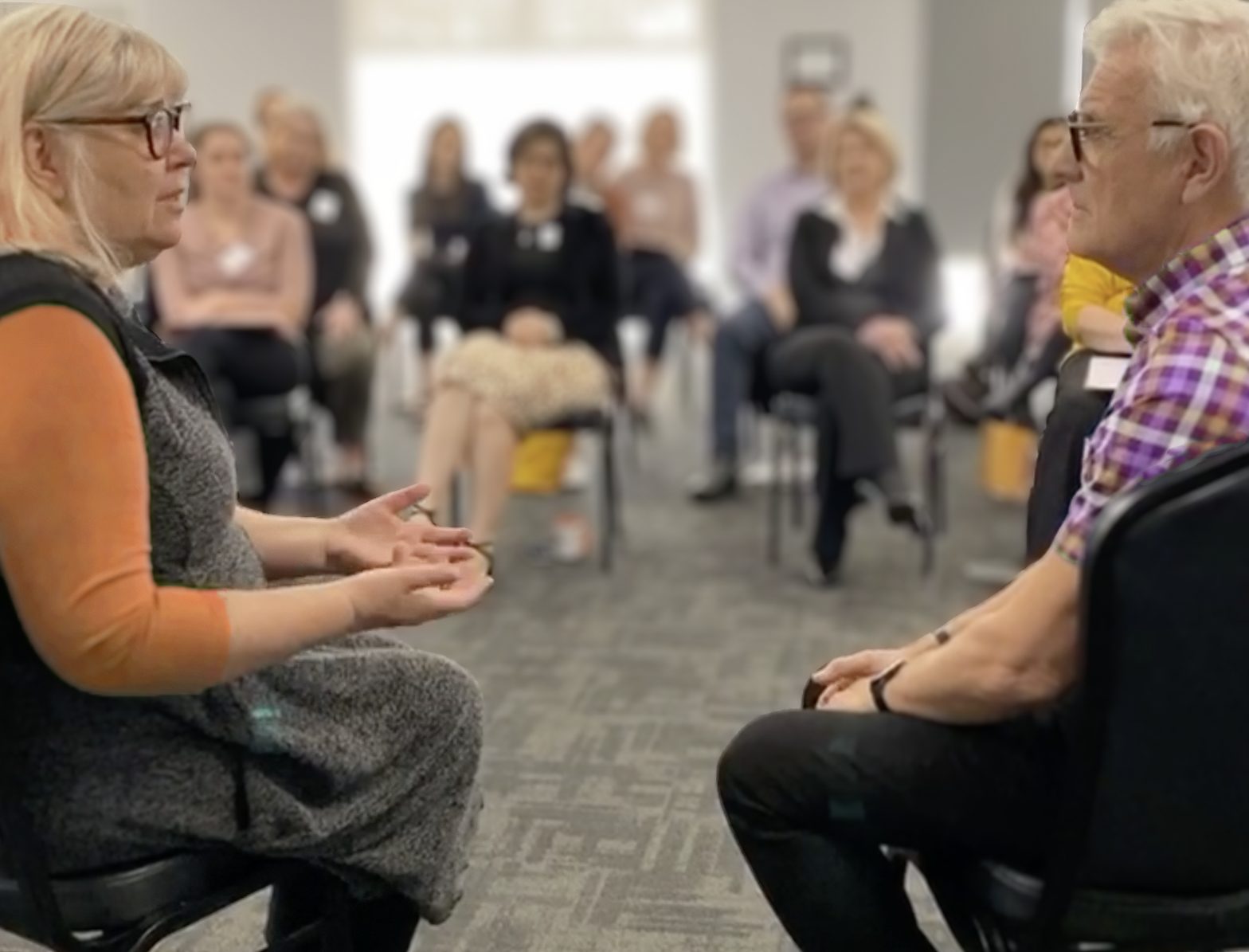
Behind Closed Doors
Skye is easy to get along with, well-liked at work, a respected member of her team. Judd is a project manager - capable, self-assured, charming. Outwardly they are an insta-worthy couple. Behind closed doors Skye discovers that love hurts. The strain of walking on eggshells eventually shows up in Skye's work. Judd's casual comments about women hint at a darker side. Their co-workers notice the signs. The question the workshop puts to your team: how do they respond?
Behind Closed Doors was co-developed with DART Group - Western Australia's leading family-violence specialists - who held script approval, vetted character behaviour, sat in on early rehearsals and shaped the facilitator framing around the play. The scenarios are written with input from people who work inside the experience every day.
Spotting the Signs is best delivered as a half-day introductory session for organisations beginning to address family and domestic violence in the workplace. It can be run open to all staff or scoped specifically for managers, supervisors and leaders.
All-staff sessions
An introduction for the broader workforce that builds awareness, language and the confidence to notice and support. Designed for primary prevention - moving the dial before incidents escalate.
Manager and leader sessions
A leader-specific track on receiving disclosures, managing confidentiality and the workplace's duty of care. Practice with our trained actors on the actual conversation a leader may need to hold.
HR, P&C and frontline support
Deeper-dive for the people in your organisation who already field disclosures. Covers safety planning, referral pathways and the boundaries between workplace support and external specialist response.
Forum Theatre layer
Participants can step into the scene and test their responses - rewinding the scenario, trying a different intervention, watching the consequence play out in real time.
What participants walk out with
Spotting the Signs builds the awareness, language and confidence your workforce needs to recognise family and domestic violence and to respond - safely - when they do.
- Recognise the early warning signs of family and domestic violence in a colleague
- Understand the gender drivers and social norms that perpetuate unhealthy behaviours
- Develop language and communication strategies that support a colleague safely
- Apply Upstander intervention frameworks - call it, disrupt it, report it, support
- Understand the workplace's duty of care under primary-prevention frameworks
- Commit to personal and collective actions that prevent and respond to family violence
“We delivered Behind Closed Doors to our whole workforce. The conversations it opened up - including with people quietly affected at home - kept happening for months. The play does what a slide deck never could.”
— HR Manager, WA government department
Frequently asked questions
Trauma-informed delivery throughout. Content warnings given in advance, opt-out provisions agreed with your team before delivery, and access to support resources flagged at the start. Our facilitators are trained to read the room and respond if someone is affected. We work with you on the safety wrap before we run.
We adapt scenarios to your sector - the project manager character can be a clinician, a supervisor, a public servant, a teacher. The behaviour patterns are universal; the surface context is tailored so the recognition lands without distance.
DART Group is Western Australia's leading family-violence specialist organisation. They co-developed Behind Closed Doors with us - script approval, character vetting, early-rehearsal observation and ongoing input into the facilitator framing. They are our reference partner for this work.
Our facilitators are trained to receive disclosures safely and refer them to your nominated internal support channel. Before delivery we agree the referral pathway with your team so no disclosure falls between the cracks. We do not become the long-term support; we hand off cleanly and stay informed of the protocol.
Family violence sits alongside the Positive Duty work as part of a wider respect-at-work prevention agenda. Many organisations run this as one substantive moment within a multi-year program that also includes Upstander Training and Realising Respectful Workplaces.

Training Delivered Differently
Want to bring this conversation into your workplace?
Tell Jacob about your workforce and where the topic fits in your broader prevention strategy. Twenty minutes to scope the right session.