
Every workforce already has its peer supporters. Train them before they need it.
Practical, rehearsable peer-supporter training for the colleagues your workforce already turns to. Built around real workplace scenarios and live practice with our trained actors - so capability is rehearsed before it is needed.
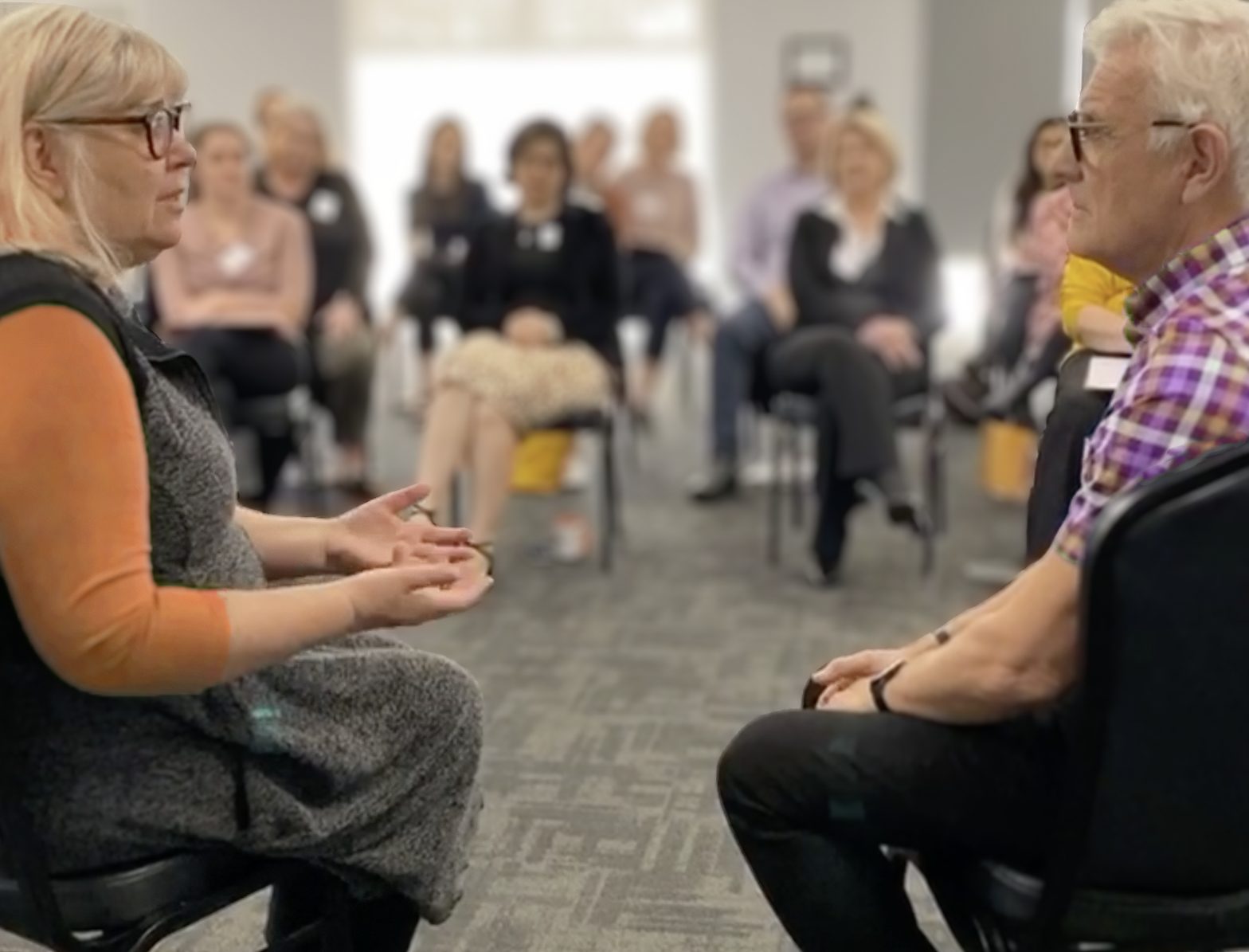
The colleagues people seek out when something is going wrong
Most workforces already have informal peer supporters - the colleague people seek out when something is going wrong. Peer Supporter training equips those people with the skills to do the work well: notice the change, hold the supporting conversation, know the boundary between peer support and professional referral, and stay alongside without overstepping.
Every participant practises live with one of our trained actors. The capability is rehearsed before it is needed. When the moment arrives, the muscle is there.
Peer Supporter is best run as a full-day workshop with cohorts of 8 to 16 participants - small enough for every person to practise multiple supporting conversations live with our actors. Refresher cadence is recommended every 12 to 18 months.
Notice the change
The early signals - withdrawn, distracted, irritable, exhausted, working twice as hard for half the output. Peer supporters trained to spot the change before it compounds into crisis.
Hold the conversation
The supporting conversation looks specific. Curious without prying. Warm without sliding into rescuing. Practised live with our actors playing the colleague on the other side - including the colleague who deflects.
Know your boundary
What a peer supporter can do, what a manager should do, when an EAP referral is the right move and when a more urgent escalation is. The boundary that protects both supporter and colleague.
Refer with care
How to hand off to professional support without abandoning the colleague. The warm referral - what to say, what to do next, how to stay in the picture without overstepping.
Where peer support matters most
Peer Supporter training lands hardest in workforces where colleagues already turn to each other before they reach the EAP. The full-day workshop is built around your workforce's actual moments - not generic mental-health-first-aid content.
- Mining and resources workforces with formal peer-support programs
- Healthcare and emergency-services teams building resilience around traumatic events
- Construction and utilities companies with high-pressure shift work
- Community and not-for-profit teams exposed to vicarious trauma
- Education and tertiary teams supporting students through complex moments
- Corporate teams running a peer-support layer alongside their EAP
“Our peer supporters did MHFA years ago. This was the first time they practised the conversation with someone who pushed back the way a real colleague would. They left with capability, not just a certificate.”
— WHS Manager, mining services contractor
Frequently asked questions
MHFA is foundational awareness and protocol training - a strong starting point. Our Peer Supporter training is the next layer: practised conversations with trained actors, including the colleague who deflects, the colleague who escalates, the colleague who minimises. It builds the muscle MHFA prepares for.
No. The whole point is that peer supporters are not clinicians - they are colleagues. The training builds the listening and referral skills they need, and makes the boundary between peer support and professional support unmistakable. The escalation paths are clear, not improvised.
Yes. We work with your existing referral pathways, your EAP provider, your psychological-safety policies and your incident-response protocols. The training reinforces what is already in place; it does not replace it.
We cover supporter self-care explicitly - the boundary, the recognising-your-own-load, the conversations you should not be holding. Peer support without supporter wellbeing burns people out fast.
Every 12 to 18 months. The skill atrophies without practice, and workforces change - new starters become the colleagues people turn to. Many of our clients run an annual refresh as part of their psychosocial-safety calendar.
Training Delivered Differently
Who are the peer supporters in your workforce already?
Tell Jacob about the workforce, the existing support layer and the kind of moments your peer supporters meet. Twenty minutes to scope the right cohort.