
75% of us fear public speaking. Presentation skills are taught, not born.
Presentation craft is trainable - it just isn't taught well most of the time. Our facilitators and actors have mastered verbal and non-verbal communication across stage, screen and many other contexts. We turn that expertise into practical skills your people keep using.
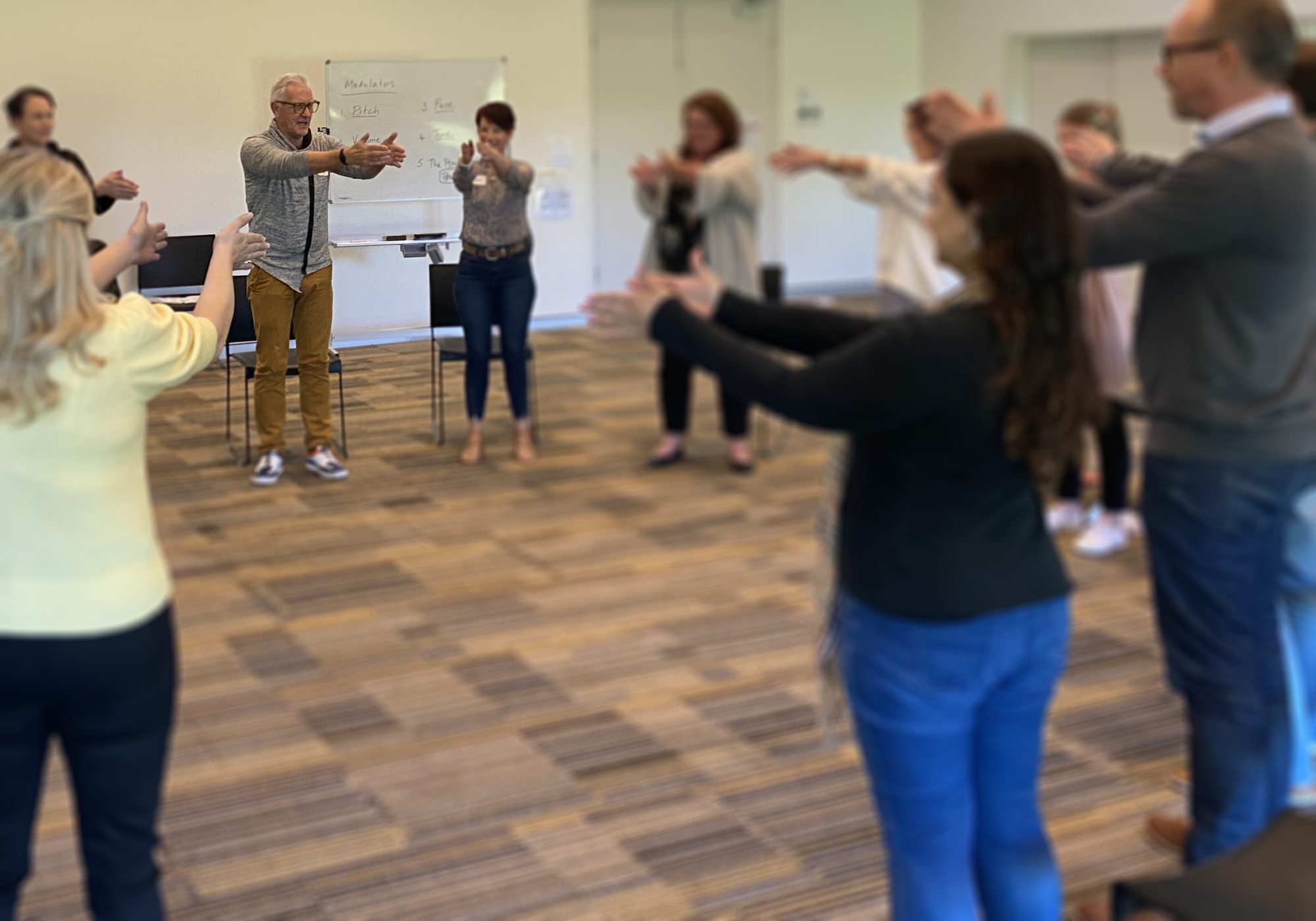
Three components. One confident presenter.
The fear is real and it's common. Acknowledging that is where our training starts - and pretending it isn't an issue is where other programs go wrong. We use the techniques acting coaches and professional speakers train with: not theory about confidence, craft for delivery.
Most presenters use one voice, one physical approach, one energy level for everything. A keynote voice is different from a boardroom voice, which is different from a teaching voice. We train the full range so participants can choose deliberately.
For senior executives or speakers preparing for a specific high-stakes event, one-on-one coaching is also available: actor-coaches working individually on voice, presence, structure and delivery, with video review across multiple sessions.
Every participant needs stage time to improve. Group sizes are kept to 12–20 specifically because larger groups compress the individual practice time that makes the difference. Theory without stage time changes nothing.
Physicality
Motion communicates emotion. Stance, posture, how you enter a room, what you do with your hands, how you use stillness - these are learnable skills drawn from acting craft.
Voice
Pitch, pace, volume, emphasis, silence - we explore vocal modulators and practise adapting voice to purpose. Keynote, boardroom, teaching: each context calls for a different vocal choice.
Confidence strategies
Breath work, nerve reframing, rehearsal techniques, recovery when things go wrong. Presenting with confidence is a skill built through practice - and the practice is the training.
Presentation craft is trainable. It just isn't taught well most of the time.
The fear is real, and it's common. Acknowledging that is where our training starts. From there, every participant rehearses the room they have to walk into.
We all have to talk to colleagues in the workplace - often we find ourselves presenting information to them. That's where The Experience Lab's powerhouse of presenters comes in. Our facilitators and actors have mastered the art of verbal and non-verbal communication, not just on stage or screen but across many contexts. We turn our expertise into practical magic, teaching participants how to overcome their fear and discomfort to present with confidence.
The three components we train
Physicality
Motion communicates emotion. We draw on techniques used by acting coaches to help you master your physical presence - how you enter a room, where you place your weight, what you do with your hands, how you use stillness. These are skills, and they're learnable.
Voice
A dynamic voice keeps listeners engaged. We explore vocal modulators - pitch, pace, volume, emphasis, silence. A keynote voice is different from a board-room voice, which is different from a teaching voice. Most presenters use one voice for everything, and it costs them.
Confidence
Presenting with confidence isn't a birthright - it's a skill built through practice. We impart strategies to help you overcome stage fright: breath work, nerve reframing, rehearsal techniques, recovery when things go wrong.
Who this training is for
- Executives pitching to boards or industry forums
- Emerging leaders preparing for their first major presentations
- Sales and professional services staff presenting to clients
- Technical experts explaining complex material to non-technical audiences
- Clinical educators teaching their specialty
- Public sector staff briefing ministers, committees or community meetings
- Conference keynote speakers wanting to elevate their craft
One-on-one coaching as an alternative
What a session looks like
Half-day or full-day for cohort workshops. Ideal group size 12 to 20 because everyone needs practice time with the trainer to improve. One-on-one coaching engagements typically run across 2–4 sessions with video review between.
- Physicality training - stance, posture, hands, stillness and entry
- Voice modulators - pitch, pace, volume, emphasis, silence
- Confidence strategies - breath work, nerve reframing, rehearsal techniques
- Live practice with feedback from professional facilitators
- Every participant gets individual stage time with the trainer
- One-on-one coaching option for executives or specific events
“The team from The Experience Lab were perfect to deliver a body language workshop to our participants on our Women on the Podium conducting course. Their interactive, participative methodology gave every participant a new insight into how to 'own' the space in which they work.”
— Founder & CEO, Perth Symphony Orchestra
Frequently asked questions
Yes. Introversion isn't the issue - most of what we teach is craft, not personality. Introverted presenters often become some of the most compelling speakers precisely because they've thought about the structure and delivery rather than relying on extroverted energy.
Yes. This is what one-on-one coaching is built for. We work directly to the specific event's context, structure and audience. Across 2–4 sessions with video review between, we can make a material difference to delivery.
Executive coaching tends to be broader - leadership, career, communication generally. Our presentation skills training is narrower and more craft-focused. For a specific presentation moment, we're usually the right call. For broader executive development, an executive coach often is.
Visible improvement happens in the session itself for most participants. Transferring that improvement to high-stakes events requires practice; we build in rehearsal techniques participants keep using afterwards.
For cohort workshops, 12 to 20 is ideal because everyone needs individual practice time with the trainer. Larger groups work for introduction and theory but the stage-time component gets compressed - and stage time is where the skill builds.
Training Delivered Differently
Let's talk about your presenter
Whether you're sourcing training for a cohort or coaching for one senior speaker with a specific upcoming event, twenty minutes with Jacob will get you a clear picture of fit. Bring the context - the audience, the stakes, the event.