
The behaviour we walk past is the behaviour we accept.
Most people recognise inappropriate behaviour. Most don't intervene. The gap between seeing it and doing something is where culture either shifts or doesn't - and awareness training alone doesn't close it. Only practice does. We give your people a practical toolkit and the chance to use it before the stakes are real.
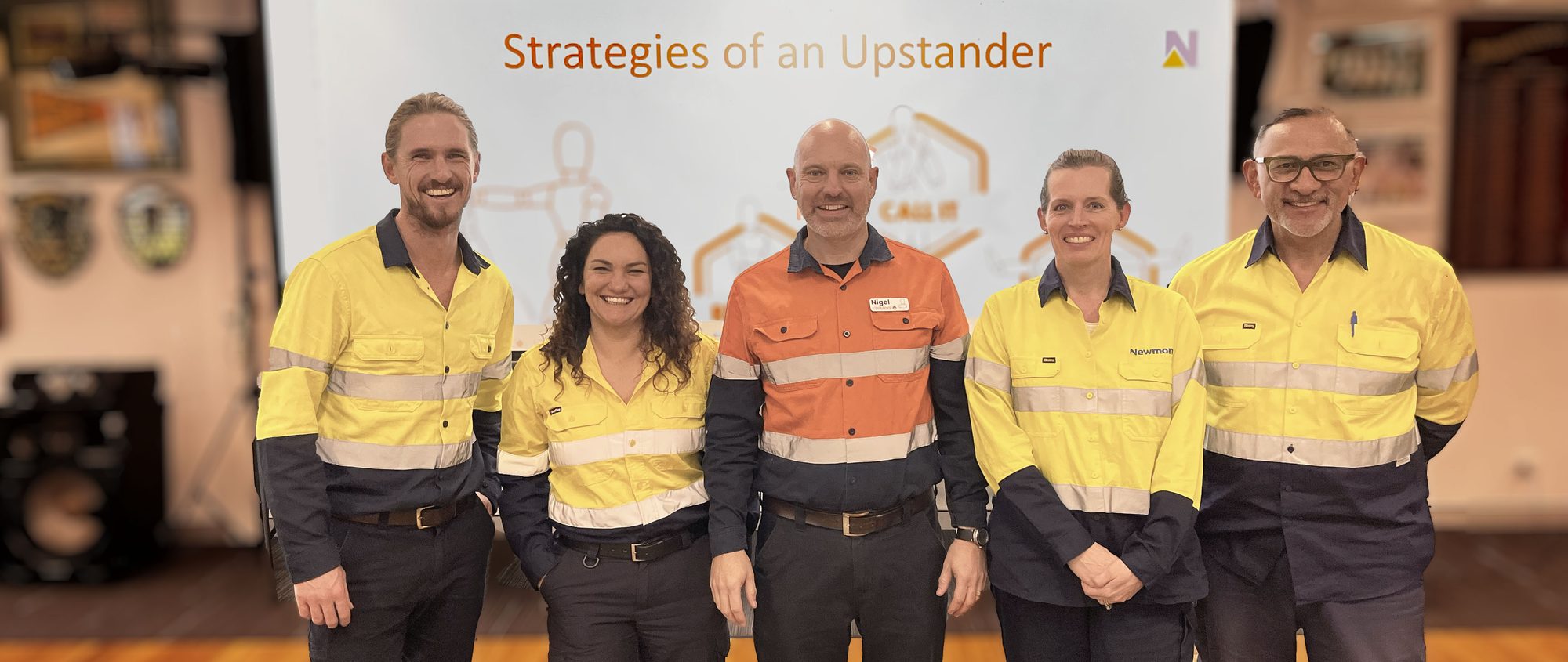
A practical toolkit - not just a moral stance
Being an Upstander requires a practical toolkit - winging it rarely works in the face of inappropriate behaviour. We immerse learners in real, messy moments and give them specific techniques for each situation, with the chance to practise before the stakes are real.
The four Upstander behaviours are a toolkit, not a framework tied to one topic. They show up across sexual harassment, bullying, psychosocial risk and D&I. Most clients run Being An Upstander alongside one of those programs to extend the workforce's bystander capability.
We also offer an Upstander for Leaders extension covering the specific challenges leaders face: receiving reports, managing confidentiality, supporting distressed employees, and knowing when an incident requires escalation versus support.
Australian workplaces are often conflict-avoidant. We build that into the scenarios and practise lower-confrontation responses - Disrupt, Report, Support - that still interrupt the pattern without requiring direct call-outs.
Call it
Naming the behaviour in the moment, clearly and without escalation. Practised for the situations where a direct response is both safe and appropriate.
Disrupt it
Interrupting through humour, redirection or question - when a direct call-out would escalate things unhelpfully. Often the most useful tool in conflict-avoidant cultures.
Report it
Channelling the observation through the right formal mechanism - understanding when and how to use reporting systems rather than handling things directly.
Support
Showing up for the person on the receiving end - during the incident and after. The most overlooked Upstander behaviour, and often the most powerful.
Recognising the moment isn't the hard part. Acting is.
Most people recognise inappropriate behaviour. Most don't intervene. The gap between seeing it and doing something is where culture either shifts or doesn't. Awareness training doesn't close that gap. Only practice does.
Being an Upstander requires a practical toolkit - winging it rarely works in the face of inappropriate behaviour. We impart the tools to kindle curiosity and spark involvement by immersing learners in real, messy moments. Our facilitators and Corporate Actors hook participants in with authentic scenarios and invite learners to reflect, contribute to discussion and build their confidence to act when it matters most.
The four Upstander behaviours
Every Being An Upstander program teaches the same practical toolkit:
Call it
Naming the behaviour in the moment, clearly and without escalation. The most direct response - and the one that takes the most courage.
Disrupt it
Interrupting through humour, redirection or question - when a direct call-out would escalate things unhelpfully. Often the most useful tool in conflict-avoidant cultures.
Report it
Channelling the observation through the right formal mechanism. Understanding when an incident needs the formal pathway rather than handling it directly.
Support
Showing up for the person on the receiving end - during and after. The most overlooked Upstander behaviour, and often the most powerful.
How we build the skill
Corporate Theatre
Behaviours must be seen to be understood. We explore how silence signals acceptance and how speaking up shifts culture, bringing Upstander actions to life through customised plays that help participants feel the stakes, not just understand them.
Dynamic Facilitation
We're shaping cultures of courage to unlock the full potential of everyone on your team. Our facilitators empower participants to speak up, support others and lead the shift toward respectful workplaces.
Upstander Conversations
Practice now to speak up when it counts. Learners work with our actors and facilitators to rehearse Upstander interventions - refining communication techniques, navigating "Call it" moments with clarity, and developing meaningful ways to "Support."
Upstander for Leaders - the extension for duty of care
How this pairs with other topics
Being An Upstander is most commonly delivered as a complementary module alongside Preventing Sexual Harassment, Combating Workplace Bullying or Realising Respectful Workplaces. The four Upstander behaviours show up in all three of those programs.
The plays we use for this topic
Nothing is delivered off the shelf. These are the plays in our repertoire - every one gets tailored to your workplace before it goes in the room. Jacob picks and adapts on the scoping call.
The play written around the four Upstander behaviours in action.
Where Upstander work intersects with outdoor, high-vis and trade culture.
Riley navigates a day of team issues; Upstander moments appear across bullying, harassment and broader respect topics.
What a session looks like
Half-day for the workforce session, with a leader-specific Upstander for Leaders extension of 3–4 hours for those with duty of care responsibilities. Most commonly delivered alongside Sexual Harassment, Bullying or Respectful Workplaces programs.
- Corporate Theatre play bringing Upstander moments to life
- The four Upstander behaviours - Call it, Disrupt it, Report it, Support
- Upstander Conversations - practice with actors and facilitators
- Lower-confrontation response techniques for conflict-avoidant cultures
- Upstander for Leaders extension - duty of care, confidentiality, receiving reports
- Can be paired with Sexual Harassment, Bullying or Respectful Workplaces programs
“I would just like to pass on to your team a huge thanks in the delivery of the Upstander Training conducted on site. All correspondence from the crews at this morning's pre-start is that it was one of the best delivered training packages they have been involved in.”
— Site Superintendent, Downer
Frequently asked questions
Sexual Harassment and Bullying training anchors on the specific behaviour set and legal frameworks for that topic. Being An Upstander focuses on the universal skill of intervention across all of those situations. The two programs are designed to run together rather than substitute for each other.
Yes. Upstander for Leaders extends the workforce content with duty of care responsibilities, receiving reports, managing confidentiality and supporting distressed employees without over-stepping. Usually a 3–4 hour extension on the workforce session.
No. The four Upstander behaviours include Disrupt (redirecting indirectly), Report (formal channel) and Support (showing up afterwards). Direct call-outs are one option among several, and we practise the lower-confrontation responses that work in conflict-avoidant cultures.
Many Australian workplaces are. We build that into the scenarios and practise lower-confrontation responses that still interrupt the pattern. Disrupt, Report and Support are often more useful than Call It in those settings.
Ideal 30 to 40. Up to 50 also possible for the workforce session. The Upstander for Leaders extension works best at 12 to 20 for more practice time per participant - leaders face more complex situations and need more rehearsal time.
Training Delivered Differently
Let's talk about your Upstander program
If you're extending a Sexual Harassment, Bullying or Respectful Workplace program with bystander skills, or responding to a specific incident where people didn't act, twenty minutes with Jacob will clarify what a session for your workforce could look like.